
Bulk Material Supply: Presses vs. Pumps
Posted
Bulk Material Supply: Presses vs. Pumps
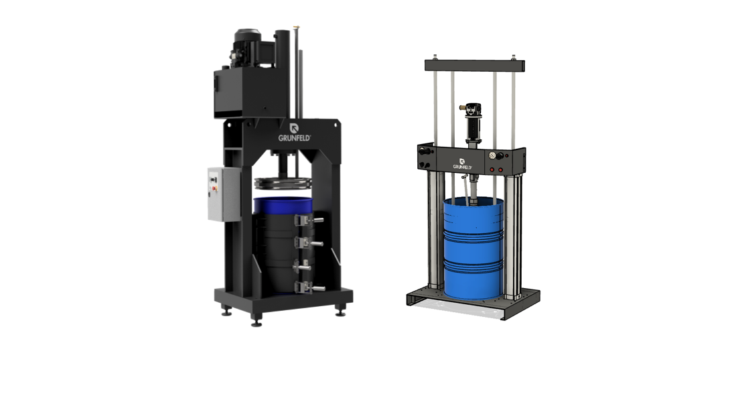
When filling or packing viscous products, bulk material is typically supplied to the filling line using either a hydraulic discharge press or a pump. Each method offers distinct advantages and limitations, and selecting the right system depends on both process requirements and facility layout.
This blog provides an overview of both technologies and outlines the key considerations for choosing the most suitable solution.
Hydraulic Discharge Presses
Hydraulic discharge presses use a platen to apply force directly onto the material, feeding it from the container.
Advantages
- Minimal fluid contacting parts: The platen is typically the only component in contact with the material.
- Simplified cleaning: This makes presses ideal for processes requiring frequent product changeovers.
- Low maintenance: Fewer moving parts in contact with the product reduce wear and maintenance demands.
Limitations
- Lower operating pressure: Typical presses generate around 10 bar of fluid pressure.
- Limited transfer distance: Best suited for short transfer distances using large-diameter hoses to minimise pressure losses.
Pumps (more specifically follower mounted piston pumps)
Follower-mounted piston pumps draw material from containers and feed it through the pump.
Advantages
- High discharge pressure: Enables material transfer over longer distances.
- Flexible system design: Supports smaller bore hoses and more complex piping layouts.
Limitations
- Multiple fluid contacting parts: Increases cleaning complexity.
- Maintenance requirements: Moving parts are subject to wear, particularly when transferring abrasive materials.
- Downtime during cleaning: Disassembly and reassembly are required to clean a pump.
Key Considerations
1. The materials that need to be dispensed
- If there is only one material that needs to be dispensed and there is no requirement for cleaning between batches, then the number of material contacting parts is less relevant.
- If there are multiple formulations, colour variants, or a requirement to clean between each batch, then the fewer contacting parts with the press is a strong benefit.
2. The configuration of the filling line
- If the bulk material supply and filling line can be located close together, e.g. less than 5 meters, then the pressure drop can be managed with large bore hoses and a press can generate adequate pressure and create a good flow to the filling line.
- If the bulk material needs to be transferred some distance e.g. between a production and a packing area, or from a tank farm, the higher pressure generated from a piston pump can overcome the larger pressure drop and enable the use of smaller bore hoses and pipework.
3. Requirement for inline filtration
- Filtration systems introduce additional resistance and pressure drop into the process.
- Where inline filtration is required, pumps are often necessary to overcome the increased pressure drop.
4. The bulk material storage/container
- Mixing Vessels: Materials are commonly dispensed from large mixing vessels with a hydraulic discharge press, especially if the Press can be located near to the material inlet of the filling line.
- Bulk Storage Tanks: Bulk storage tank are large installations and the filling lines are typically locate a fair distance from the tanks, therefore materials are typically transferred from bulk storage tanks with pumps.
- Drums and Pails: both Presses and Pumps are commonly configured to dispense materials from Drums and Pails.
Conclusion
Both hydraulic discharge presses and pumps play an important role in viscous material handling. The optimal choice depends on process requirements such as transfer distance, cleaning needs, system layout, and material characteristics.
Understanding the strengths and limitations of each technology ensures a more informed decision—leading to improved efficiency, reduced downtime, and better overall process performance.