Understanding Servo Dosing Systems: Advantages, Configurations, and Alternatives
Posted
Understanding Servo Dosing Systems: Advantages, Configurations, and Alternatives
Servo dosing is a term we use frequently, and for good reason. Put simply, servo dosing refers to a system where the dosing piston is driven by a linear actuator, which in turn is powered by a servo motor. This approach offers high levels of precision, repeatability, and control—key requirements in modern automated filling systems.
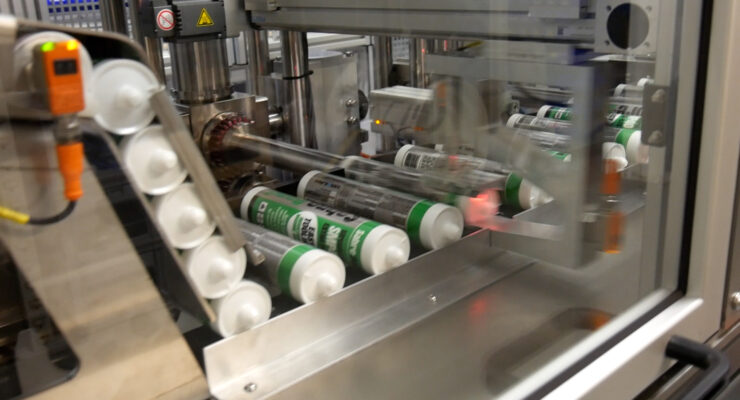
In many automated applications, servo-driven linear actuators are also used to position the cartridge itself. The actuator moves the cartridge into the filling position and then retracts it as filling takes place. When combined, these servo-driven movements create a highly coordinated and efficient filling process.
Key Advantages of Servo Dosing
Servo dosing systems offer several top-line benefits that make them increasingly popular in automated filling applications:
- Automatic synchronisation of servo motors ensures precise coordination between dosing and cartridge movement.
- Parameters are set and stored via a touchscreen, allowing for easy adjustment and repeatability.
- Minimal mechanical components, reducing wear points and manual adjustments.
- Quick and simple setup and maintenance, with fewer tools required.
- Low ongoing operating costs, thanks to energy efficiency and reduced maintenance needs.
Common Servo Dosing Configurations
Servo dosing systems are commonly configured in two main ways, depending on the application and material characteristics.
Vertical Configuration
In vertical systems, the cartridge is raised up onto the filling pipe. This configuration is commonly used for:
- Automated two-component filling systems
- Lower-viscosity one-component materials
In these systems, both the dosing actuator and the actuator that raises and lowers the cartridge are servo-driven, ensuring precise motion control and synchronisation.
Horizontal Configuration
Horizontal configurations involve sliding the cartridge across onto a filling mandrel. This setup is most often used for:
- High-viscosity one-component materials
Here again, both the dosing actuator and the cartridge retract mechanism are servo-driven, providing consistent control even when handling challenging materials.
Alternative Technologies
While servo dosing offers many advantages, there are alternative approaches that may be considered depending on application requirements and budget.
Pneumatic Systems
In pneumatic systems, both the dosing motion and the cartridge pick, place, and retract functions are driven by air cylinders.
Advantages:
- Lower initial investment due to the relatively low cost of pneumatic actuators.
Limitations:
- Performance is limited by material viscosity and speed.
- Larger cylinders can provide more force but are constrained by available compressed air flow.
- Higher long-term operating costs due to significant compressed air consumption and associated energy use.
Hydraulic Systems
Hydraulic systems typically use a hydraulic actuator for dosing, while cartridge handling functions are driven pneumatically.
Advantages:
- Also capable of handling high-viscosity materials at speed.
Limitations:
- Require both hydraulic and pneumatic systems onboard.
- Include numerous valves, regulators, throttles, and limit switches that must be set, adjusted, and maintained.
- Increased system complexity leads to higher maintenance demands over the machine’s lifetime.
Hybrid Systems
Hybrid configurations combine elements of servo, pneumatic, and hydraulic technologies. These systems can be tailored to specific applications but often inherit some of the complexity and maintenance requirements of non-servo components.
Cost Considerations
From an initial capital perspective, servo dosing systems can be more expensive than pneumatic alternatives. However, they typically feature fewer components and significantly reduced maintenance requirements. Over the lifetime of the machine, this often results in a lower total cost of ownership.
Setup, Adjustments, and Recipe Control
Servo dosing systems are designed with usability in mind. Setup and fine adjustments are typically performed directly via the touchscreen interface—no tools or mechanical adjustments required. Settings can be saved as recipes, enabling quick changeovers and consistent results across production runs.
Filling Quality and Performance
One of the key benefits of servo-driven systems is the precise synchronisation of all axes. This coordinated movement helps ensure consistent, void-free filling, even at high speeds.
Speed and Throughput
With the right combination of servo motors and linear actuators, servo-driven metering units can achieve very high dispensing speeds while maintaining accuracy and repeatability.
Reliability and Maintenance
Servo-driven systems generally contain fewer mechanical parts, which translates to improved reliability and reduced upkeep. Depending on the specification of the linear actuator, these systems can offer exceptionally high cycle counts between service intervals. In many cases, routine maintenance is limited to periodic greasing of the actuator.
Conclusion
Servo dosing systems provide a modern, efficient, and reliable solution for automated filling applications. While the initial investment may be higher, the benefits in terms of precision, flexibility, speed, and long-term operating costs make servo dosing an increasingly compelling choice across a wide range of industries.