Is an Automated Cartridge-Filling Machine Worth the Investment?
Posted
Is an Automated Cartridge-Filling Machine Worth the Investment?
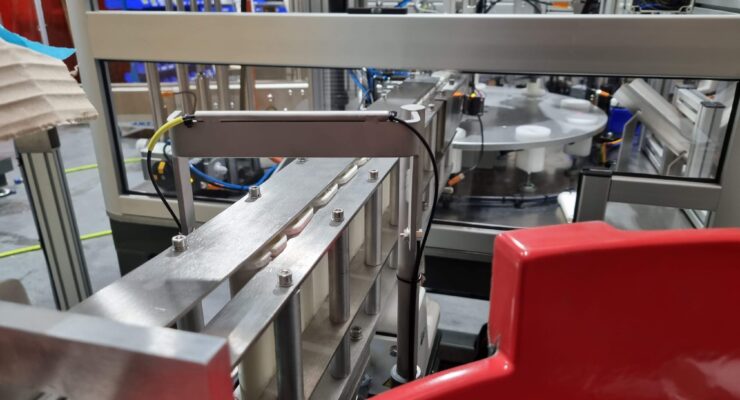
Recently, a customer visited us and saw an automated cartridge-filling machine being built.
They asked: How much does that cost?
Our answer: Nothing!
The customer looked confused: No rubbish, you don’t give them away.
Our answer: The customer has bought it, but within the first two years of operation it will have paid for itself. And from there on, year on year, it will be making the customer money.
The customer: That’s a great perspective… we know automating the filling process is the right way to go, but we just…
This certainly wasn’t the first conversation we’ve had along those lines, and it won’t be the last.
So, we will share some thoughts on the topic—firstly focusing on some key considerations, and then exploring some examples.
Considerations
There are five key areas of consideration when looking at automating the filling process, and each area has some key questions that need to be answered:
1. Number of pieces filled
How many cartridges need to be filled?
2. Manpower – cost and scarcity
How many operators does the current process need? Compared to an automated line?
How available are proficient operators?
Could the operators running the current filling process be better used on higher-value tasks?
3. Product variants and multi-reference machines
Are there different formulations and cartridge sizes/types being filled?
Can they be filled on the same automated machine?
If so, what is involved to set the machine for each variant – tooling, cost, set-up time?
(If you are not sure, we can guide you on this point.)
4. Quality – issues and controls
Are there any quality issues with the current filling method?
Does the process rely on manual inspection?
Can the quality controls be automated?
(Most likely yes, and we can guide you on this point.)
5. Downstream processes
What are the downstream processes?
Can the automatic filling machine directly feed into those processes?
(We can guide you on this point.)
Example – Going from a semi-automatic to a fully automatic filling process
The customer is filling around 1 million cartridges a year.
Their filling process was semi-automatic.
They had 3 stations, each station had 4 operators.
In addition to the 12 operators running the 3 stations, they had a further 3 operators working on the labelling and packing operation, bringing the total up to 15 operators.
Grunfeld supplied an automated filling line with integrated quality control and an outfeed directly supplying the labeller. The new automated process now only requires three operators:
1 machine supervisor and 2 packing operatives at the end of the line.
Within two years, the automation has paid for itself, and operatives who previously ran the old filling process are now working in other areas where their skills add greater value.
By the time the automated filling machine is 10 years old, it will have contributed £2 million to the customer’s bottom line.
Alternatively, we could use another example where a customer went from outsourcing their filling to bringing it in-house (with a Grunfeld line), which generated a return within the first year of operation.
Summary
Every situation is different, and each case for automating a filling operation needs to be considered on its own merits.
The five key considerations outlined above can help inform a decision (either way).
If you want help appraising automation and process improvement, please reach out to us at Grunfeld.